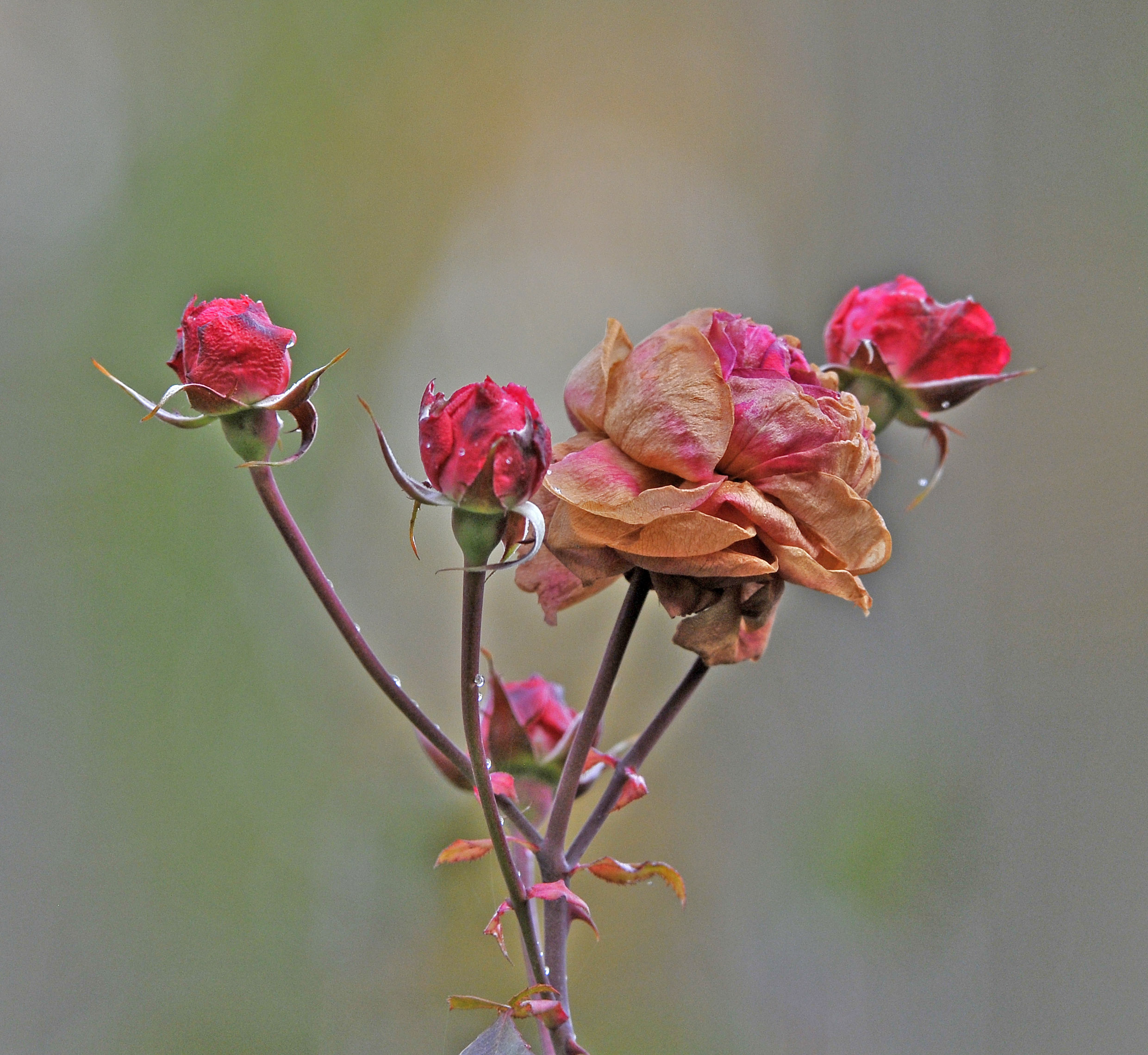
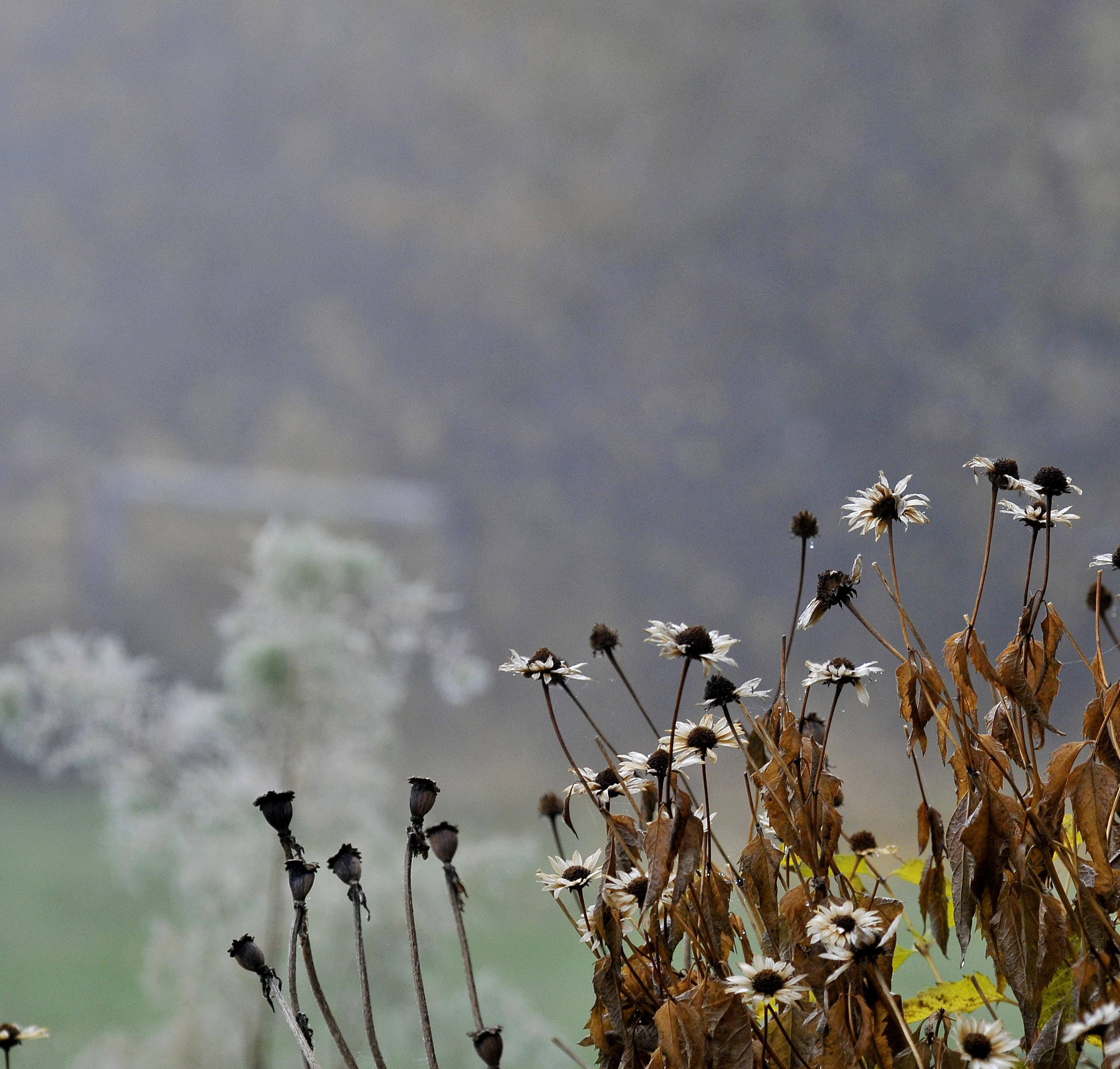
In November, the lines of the garden suggest rather than impose. Our little acts of care continue, but the big show is that of a nature quite beyond our choosing.

Grace becomes more evident, and we see how little of the splendor we enjoy is due to our own effort.
Caring for the November garden is somewhat like teaching amid late modernity.
The work continues, though the mood shifts. In spring, the work is part of hope that one can stay ahead of growth–the green explosion that has the power to overwhelm any design intended by the poor gardener. In late autumn, the work is preparation for destruction by the coming cold. The pump is drained and covered. Less hardy plants such as roses and peaches are mulched. Willow leaves that decay to an impervious, grass-killing mat are raked up and hauled away.
Here in the north country, the days shorten. The world is darker. Even daylight is suffused–the sun seems farther away, and more days are foggy, most days overcast.
It’s natural to want light without darkness. Fear of the dark is deeper than superstition, and so we create the glare and costly disenchantment of around-the-clock artificial light.
In the diminished garden, beauty persists, in an old, familiar key. The leaf fall is heavy in a yard bordered by a creek with cottonwoods more than a hundred feet tall. I came home from work last week and all the garden beds, the lawn furniture that had not been stowed, odd tools I had not put away, were blanketed in a heavy, wet mat of grayish yellow leaves. All was drab and cold, like desolation.

Moments of autumn beauty resonate with memory of what was and clarity about what is coming.
Much of the work is just cleaning the mess–imposing a tiny order that nature does not need, but that we need. We need places and places need our care. Several hours of raking and hauling revealed again the pattern of green grass, octagonal and round beds and straight borders, of paths to the creek and sauna and secret garden. It re-established the human order of a garden, pushing back the wilderness.

It isn’t death, exactly. It’s a phase.
The leaves are not removed so much as rearranged. Many are moved to the annual gardens, where they will suppress weeds and compost slowly until early spring, when I will begin tilling them into the soil. Some are used as mulch for weed suppression under aspen and mountain ash plantings on the east border of the meadow.
November reveals that it is the endless work of care that defines the gardener. French philosopher Chantal Delsol has been among the best commentators on late modernity. She observes that it is our predicament–poised as we are between our frailty and our hope–that makes of us gardeners:
All our paths are precarious–momentary designs amid forces we cannot wholly know or constrain.
The interplay of frailty and promise forbids us to dismiss all philosophies of man as illusory and compels us to reflect on humanity. Because the human fabric remains imperfect, it cannot be reinvented by the will or indefinitely molded by desire. It commands respect through its weight and resistance to manipulation. We must try to understand this frailty before we can put a face on the promise. The presence of evil prevents the future from creating its own order; it must respect a certain givenness of being which must always remain largely unknown.
The Constitutive incompleteness of man forbids him to attempt to turn perfection into reality. But he can care for what exists, and it is probably this caring that defines what is uniquely and properly human. This style of being, as it were, expresses itself in the attention man pays to the world he has inherited in order to understand that world. The world we inherit and share is full of being, in the sense that forces are at work that we did not ourselves introduce. Having focused on reinventing the world, we must now turn our gaze toward the potentialities of being. Our fascination for planning must be replaced by attending to desirable possibilities. In order to care for, improve, and clear the brush away from what exists, we must keep in check our will to begin again ex nihilo, loving both existence and those beings who exist. That is, we must love them more than the products of our own minds.
The failures of the twentieth century reveal who we are. We are not demiurges. We are gardeners.

We see with more than our eyes, and the acts of care in November are done with fallen seeds in the top inch of soil in mind–as well as tubers and bulbs and roots beneath the soil. We may lament the passing of summer, but we don’t languish in our laments. Both faith and experience teach that spring is not merely a possibility. It is certain.
Winter is not death, but a phase. Some things we love and would not choose to part with are gone for now, and some of the work is done to prepare for their return–the fragrant ebullience of daffodils blooming through late winter snow. In nature, autumn is planting time. Seeds without number fall and are blown about with profligate bounty. The darkness and decline are preparation.
Our work is care–for life that has a nature and a telos apart from our own.